Since 2018, the Serengeti Mara Ecosystem (SEMA) Project has been working with communities in Tarime, Bunda, and Serengeti districts to promote environmental conservation, climate-smart agriculture, and sustainable livelihoods.
Through collaboration with local government authorities, community groups, and partner institutions, the project has empowered farmers, youth, women, and students to become active stewards of their environment while improving their incomes.
Impact at a Glance
Project Coverage
- 3 Districts: Tarime, Bunda, Serengeti
- 8 Wards Reached
- Dozens of Community Groups Supported
Key Achievements
- 6 Environmental school clubs established
- 100 cows inseminated through improved livestock breeding
- Multiple VSLA savings groups formed and strengthened
- Youth groups producing thousands of tree seedlings
- Women groups generating income through horticulture
- Community adoption of climate-smart farming practices
Empowering the Next Generation
Environmental Clubs in Schools
To cultivate environmental responsibility among young people, the project established six environmental clubs in primary and secondary schools.
Students participate in:
- Tree planting activities
- Environmental conservation training
- Awareness campaigns on sustainable land use
Schools Involved
- Bunyunyi Primary School – Bunda
- Kunzugu Secondary School – Bunda
- Biantang’ana Primary School – Tarime
- Masanga Primary School – Tarime
- Zakhia Meghji Secondary School – Serengeti
- Natta Secondary School – Serengeti
These clubs help prepare students to become future environmental leaders and responsible farmers.
Youth as Environmental Ambassadors
The project supports youth to become entrepreneurs and conservation champions.
Youth groups have received training in:
- Agroforestry
- Horticulture production
- Environmental conservation
- Village Savings and Loan Associations (VSLA)
Success Story: Tumaini Youth Group
The Tumaini Youth Group in Nyichoka (Serengeti District) has become a leading environmental ambassador in the community.
Their achievements include:
- Raising awareness on environmental conservation in schools
- Producing and distributing tree seedlings
- Supporting farmers with tree planting initiatives
- Operating a VSLA savings scheme
Other supported youth groups include:
- Vijana Bukore
- Minaki
- Vijana Upendo
At an individual level, Mr. Mwita Igayi from Tarime planted more than 2,000 trees and established a successful horticulture farm growing onions, tomatoes, pawpaw, and sukuma wiki.
Women Driving Local Economic Growth
Women’s economic empowerment is a key pillar of the SEMA project.
Women groups have been trained in:
- Horticulture farming
- Entrepreneurship
- Village Savings and Loan Associations (VSLA)
Example: Maendeleo Kenyamosabi Women Group
The group successfully harvested 18 bags of onions from their production plot, demonstrating the potential of women-led agricultural enterprises.
Through VSLA programs, women have been able to:
- Save money collectively
- Access small loans
- Start small businesses
- Increase household income
Supported women groups include:
- Tujiendeleze
- Amka na Kazi
- Wakina Mama Mageriga
In addition, 13 women from project groups were elected to village committees during the 2019 local government elections, strengthening women’s leadership in community governance.
Community Savings and Entrepreneurship
The project introduced Village Savings and Loan Associations (VSLA) to help communities build financial resilience.
Groups such as:
- Fanya Kazi kwa Malengo
- Mkombozi
- Maendeleo
- Tujiendeleze
- Mazingira B
successfully completed their first savings cycle with profit increases ranging from 10% to 32%.
The success of VSLA groups inspired neighboring communities to form additional savings groups, expanding the financial empowerment model.
Climate-Smart Agriculture
Farmers were trained in Sustainable Agricultural Land Management (SALM) practices to help them adapt to climate change.
Key practices introduced include:
- Drought-resistant crops
- Short-maturity crop varieties
- Irrigation farming
- Crop diversification
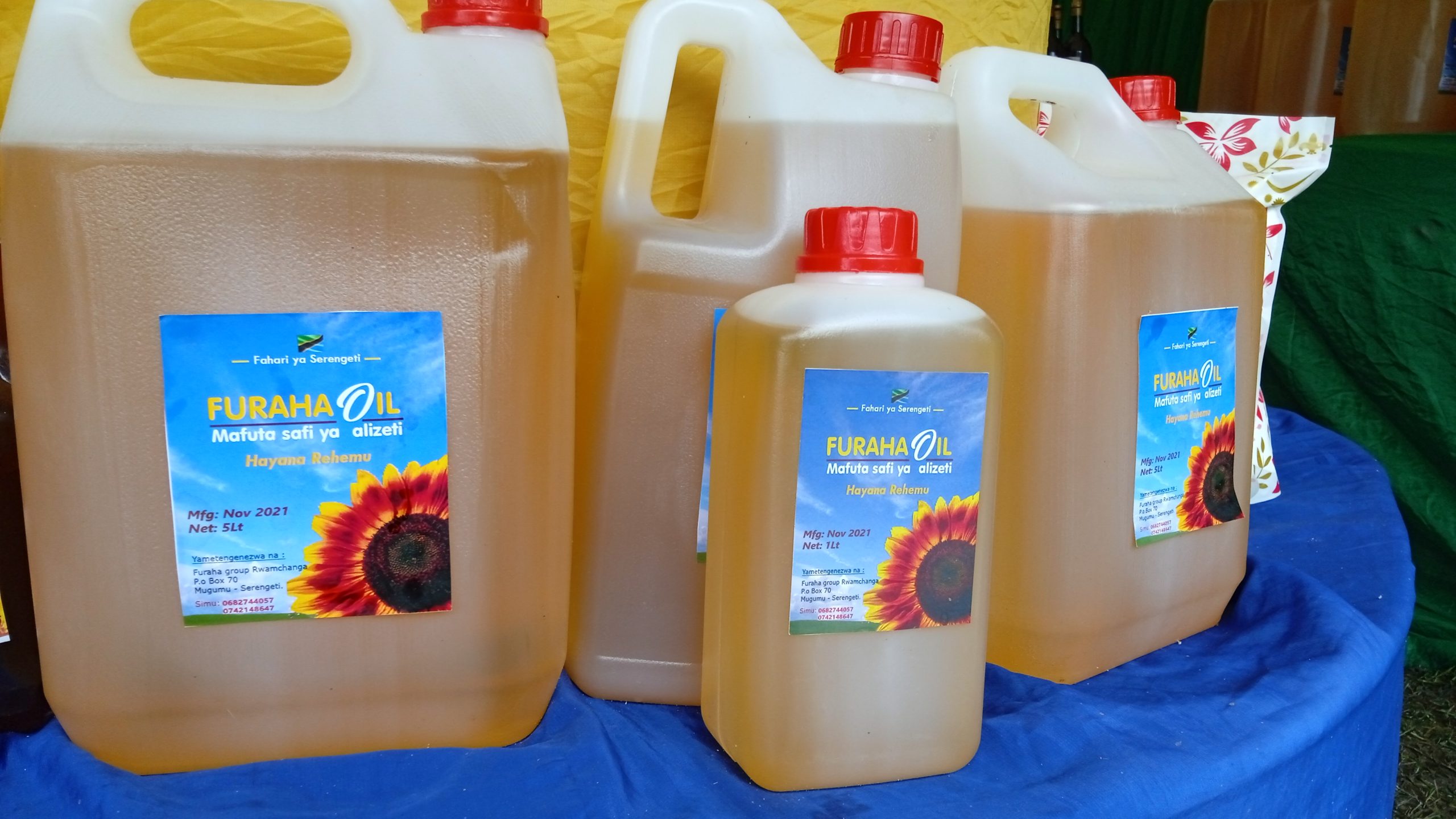
Sunflower farming has been particularly successful. Selected farmers received sunflower mother seeds for multiplication and distribution to other farmers in the region.
Conservation Through Beekeeping
Beekeeping has been promoted as both a conservation tool and an income-generating activity.
Tuhifadhi Mazingira Group – Bunda
The group began beekeeping after participating in SALM farming activities and selling harvested maize. They currently own 15 beehives and aim to expand to 100 beehives.
Beekeeping helps protect forests while providing communities with new income opportunities.
Expanding Income Opportunities
Fish Farming
The Chapakazi Group in Serengeti District received training in fish farming, including pond management, feeding practices, and harvesting techniques. The group is now actively producing fish as a new income-generating activity.
Improved Livestock Production
To improve livestock productivity, the project introduced:
- Dairy farming
- Artificial insemination (AI)
The Dunduliza Group started with one dairy cow and now owns four cows, producing milk for sale.
In 2019, 100 cows in Bunda District were inseminated to improve local breeds and increase milk production.
Reducing Human–Wildlife Conflict
Communities near Serengeti National Park often face crop destruction caused by elephants.
To address this challenge, the project introduced hot pepper farming, a natural deterrent that helps keep elephants away from farms.
Training was provided to communities on producing and using hot pepper to protect crops in an environmentally friendly way.
Partnerships for Sustainable Impact
The SEMA project works closely with government institutions and development partners to strengthen its impact.
Key partners include:
- Local Government Authorities (Agriculture, Livestock, Forestry, and Community Development departments)
- Tanzania Forestry Services Agency
- Pop Vriend Seeds
- JKT Bulamba
- BACODE
- SENAPA
- SEEDCO
- Neo Life
- Malihai
- TAWLAE
These partnerships provide technical expertise, training support, and collaborative opportunities to ensure long-term sustainability.
16 Comments
antibiotics online prescription
April 1, 2026antibiotics online prescription
antibiotics online prescription
cialis for prostate
April 3, 2026cialis for prostate
cialis for prostate
metoprolol 25 mg pill
April 5, 2026metoprolol 25 mg pill
metoprolol 25 mg pill
dexlansoprazole 30 mg price
April 12, 2026dexlansoprazole 30 mg price
dexlansoprazole 30 mg price
doxycycline monohydrate 100 mg capsule
April 12, 2026doxycycline monohydrate 100 mg capsule
doxycycline monohydrate 100 mg capsule
diflucan for yeast uti
April 15, 2026diflucan for yeast uti
diflucan for yeast uti
tadalafil heart benefits
April 20, 2026tadalafil heart benefits
tadalafil heart benefits
sildenafil vs tadalafil
April 20, 2026sildenafil vs tadalafil
sildenafil vs tadalafil
what is cenforce tablets
April 21, 2026what is cenforce tablets
what is cenforce tablets
sildenafil maximum effect
April 22, 2026sildenafil maximum effect
sildenafil maximum effect
sildenafil cenforce 150
April 23, 2026sildenafil cenforce 150
sildenafil cenforce 150
sildenafil amazon
April 25, 2026sildenafil amazon
sildenafil amazon
tadalafil bph reviews
May 2, 2026tadalafil bph reviews
tadalafil bph reviews
domperidone or motilium
May 3, 2026domperidone or motilium
domperidone or motilium
priligy alcohol reddit
May 4, 2026priligy alcohol reddit
priligy alcohol reddit
avanafil generico precio
May 4, 2026avanafil generico precio
avanafil generico precio